Fast, Reliable Attic Insulation Across Newport Beach
Attic insulation in Newport Beach typically costs $1,450 – $3,800 depending on attic size, access, and material, and most jobs we schedule are completed in a single day. The bigger variable in Newport Beach isn’t square footage as much as access: alley-load garages, tight townhome doors, and older cottages with shallow roof pitches change how equipment moves and how long a job takes. We know Newport Beach’s housing stock because we’ve worked it, from Balboa Island bungalows to Newport Coast hillside builds. Call (833) 467-6922 and we’ll give you a straight answer on your attic, not a sales script.
Why Easton Insulation Co Is Newport Beach’s Preferred Attic Insulation Company
Newport Beach homeowners call us because we show up ready for what the house actually is, not what a generic insulation crew expects it to be. Our installers work with eight manufacturer brands across four insulation categories: fiberglass, mineral wool, spray foam, and cellulose. That range matters in Newport Beach, where a 1920s plaster-walled cottage on Balboa Island needs a different approach than a 1980s tract home in 92660 or a custom build near Newport Coast. We’re not tied to one product line, so the recommendation comes from what your attic actually needs.
Noel Carrasco leads our crews, and he’s the one who walks attics before we quote. That means the person evaluating your roof deck, checking your existing baffles, and measuring your access clearances is the same person accountable for the finished job. Our Newport Beach customers consistently point to two things in their feedback: we explain the “why” behind each material choice, and we don’t leave a mess in tight beach-house attics where there’s nowhere to hide one.
Insulation Contractors in Newport Beach
Attic Insulation contractors in Newport Beach work a different set of problems than crews running tract-home routes inland. The job here often involves retrofitting homes built before modern building codes, where attic clearances are minimal, framing is irregular, and ocean-facing roof decks carry condensation that inland Orange County homes never see. A qualified contractor has to plan for dense-packing shallow cavities, air-sealing before insulating, and staging equipment through alley access or narrow interior doors.
Dense-Pack Retrofits for Older Cottages
Many Balboa Island and Peninsula homes from the 1920s through 1950s have plaster-and-lath walls over stud bays too shallow or irregular for standard batts. The practical answer is dense-pack cellulose or spray foam applied from the attic side or through exterior penetrations, leaving the original plaster intact. We’ve done enough of these to know which cavities will take which material without bulging the walls.
Coastal Durability and Vapor Control
Salt-laden marine air works its way into attic assemblies here in a way it doesn’t ten miles inland. Wet batt facings sag, fasteners corrode, and fiberglass that stays damp loses its R-value quickly. We spec moisture-tolerant materials and pay attention to vapor barriers because in Newport Beach, attic insulation is as much about managing moisture as about R-value.
Attic Ventilation in Newport Beach
Attic Ventilation in Newport Beach isn’t an add-on; it’s often the difference between insulation that lasts and insulation that rots quietly under the roof deck. The marine layer sits over Balboa Island and the Peninsula most spring and summer mornings, pushing moisture into any attic that can’t move air. Without proper intake and exhaust, even good insulation absorbs that humidity and starts failing within a few seasons.
Ridge-to-Eave Systems for Marine-Layer Moisture
We size ventilation to the attic volume and the roof’s exposure direction. Ocean-facing roof decks on Balboa Peninsula homes get more condensation than east-facing slopes in 92660, so those attics need more exhaust capacity. The fix usually means pairing ridge vents with soffit or gable intakes before or during insulation work.
Baffles and Air Sealing First
Baffles keep blown-in insulation from blocking soffit vents, and that simple step prevents a lot of Newport Beach attic moisture problems. We air-seal top plates, can lights, and penetrations before insulating, because moving air through the assembly carries more moisture than most homeowners realize. Ventilation and insulation are one system in a coastal attic, not two separate line items.
Trusted Brands We Service in Newport Beach
We install Rockwool and Knauf mineral wool when fire resistance or sound dampening is a priority, CertainTeed fiberglass when the attic calls for a straightforward batt job, and Icynene spray foam when air-sealing and R-value per inch matter most. Because we work with all eight brands across four material categories, the answer to “what should go in my Newport Beach attic” comes from your roof pitch, your access, and your budget, not from whichever product we happen to stock. Material availability is fast from our Santa Ana yard, so Newport Beach jobs rarely wait on product.
Common Attic Insulation Problems We See in Newport Beach Homes
- Sagging, damp fiberglass in ocean-facing attics: the marine layer pushes condensation through roof decks on Balboa Island and Peninsula homes, and batt facings corrode or sag. Replacing wet batts without fixing ventilation just means the same problem returns in two years.
- Shallow, irregular stud bays in pre-1950 cottages: standard R-15 or R-19 batts won’t fit, and jamming them in crushes the air pockets that give them R-value. Dense-pack from the exterior or attic is the only real fix for these plaster-walled homes.
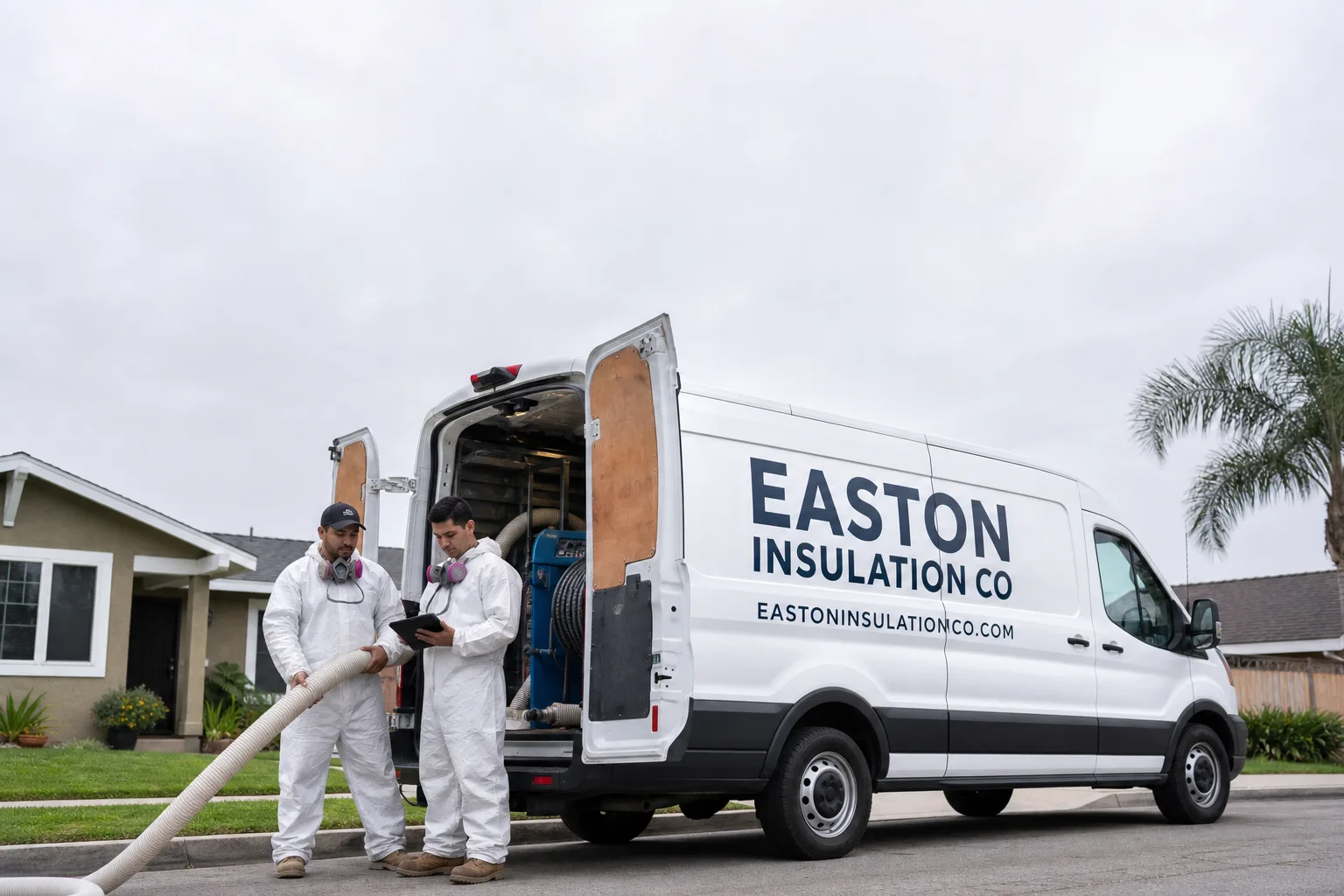
- Alley-load access on the Peninsula and Balboa Island: hose runs from the truck to the attic can stretch 150 feet or more, and equipment has to thread through tight townhome doors. Crews that don’t plan for staging leave half the attic ventilated or vent into the conditioned space.
- Attic ventilation that stopped working years ago: old soffit vents painted shut, birds’ nests in gable vents, or ridge vents installed without proper baffles. In Newport Beach’s damp air, a non-venting attic destroys insulation faster than almost anything else.
Pricing for Attic Insulation in Newport Beach, CA
A standard attic insulation top-up in Newport Beach runs $900 – $1,800 for a typical 1,200 – 1,800 square foot single-story home in 92660 or 92663. Full attic insulation replacement with air sealing typically lands between $2,200 and $4,800 depending on access difficulty and whether we’re working around existing ductwork. Dense-pack retrofits on older Balboa Island or Peninsula cottages start around $1,500 and go up with cavity complexity. Attic baffles and ventilation prep add $400 – $1,200 depending on the roof design. Every quote includes a written line-item price, and we don’t charge to come look at your attic. Call (833) 467-6922 for a free estimate.
We Also Serve Cities Near Newport Beach
Our crews cover Newport Beach plus the surrounding communities of Costa Mesa, San Joaquin Hills, Fountain Valley, and Irvine. If your attic is in one of those areas and you’re looking for Newport Beach insulation work, you’ll get the same crew, the same brands, and the same one-day scheduling.
Serving Newport Beach, CA — Our Local Coverage Area
We’re based in the Newport Beach area and know this community well. Use the map below to see our service coverage — if you’re nearby, we can almost certainly help.
FAQs About Attic Insulation in Newport Beach
Yes, and that’s most of what we do on Balboa Island and the Peninsula. We dense-pack GreenFiber cellulose or spray foam into the wall and kneewall cavities from the attic side or through small exterior penetrations, leaving original plaster untouched. The key is knowing which cavities will accept material without bulging: shallow or irregular stud bays need a slower, lower-pressure fill. Call (833) 467-6922 and we’ll walk your specific cottage’s layout before quoting.
Spray foam performs best against salt air and moisture because it air-seals while it insulates, and closed-cell foam doesn’t absorb water or support mold. For mineral wool, Rockwool and Knauf hold their shape and R-value even when exposed to damp air because the material is hydrophobic and fire-resistant. Fiberglass works fine in Newport Beach attics too as long as ventilation is correct, because a dry, well-vented attic keeps any batt material functional. The real answer depends on your attic’s exposure and existing ventilation.
They affect it more than most homeowners realize. Hose runs can stretch 150 feet or more from the truck to the attic hatch, and narrow interior stairs mean equipment gets moved in pieces. We plan these jobs around parking blocks available on Marine Avenue or the alleys, and we’ll stage hoses and machines so the attic gets completely filled without running equipment through your living room twice.
Almost always, yes. The marine layer that sits over Newport Beach from late spring through early fall pushes moisture into attic spaces that inland Orange County attics never see. If your attic has no working intake at the soffits or exhaust at the ridge, new insulation will absorb that moisture and start failing. We check ventilation on every Newport Beach attic quote and include baffles and air-sealing where they’re missing. Call (833) 467-6922 if you’re unsure what your attic currently has.
We’re an authorized installer for Owens Corning, Johns Manville, CertainTeed, Knauf, Rockwool, Icynene, Demilec, and GreenFiber. That’s eight brands across four insulation categories: fiberglass batts and rolls, mineral wool, open- and closed-cell spray foam, and recycled cellulose. No single manufacturer’s catalog drives our recommendation. Your Newport Beach attic’s roof pitch, access, and moisture exposure do.
Written by Noel Carrasco, Owner at Easton Insulation Co, serving Newport Beach attics from our Santa Ana yard.