CertainTeed Attic Insulation in Santa Ana: A Homeowner’s Guide
CertainTeed attic insulation can absolutely work in Santa Ana homes, but it’s not automatically the right call for every attic. The InsulSafe SP blown-in line and ProCraft batts are solid products. The deciding factors are your attic’s geometry, your home’s humidity history, and whether your installer understands compression, and we’ll walk through all three below. If you’d rather skip the research and get an honest read on your attic, call (833) 467-6922.
The Three CertainTeed Product Lines That Matter for Santa Ana Attics
CertainTeed sells a lot of insulation products, but for attic work in Santa Ana, there are three you’ll actually encounter. Knowing the difference before you get quotes will save you from paying for the wrong application.
- InsulSafe SP is the blown-in fiberglass option. It’s the workhorse for vented attic floors in existing homes. Installers blow it loose over the attic floor to whatever depth hits your target R-value, and it settles to a predictable density. For a retrofit where you’re adding insulation over an existing layer, this is usually the most practical CertainTeed product for Santa Ana ranch homes and older builds from the 1950s through 1980s.
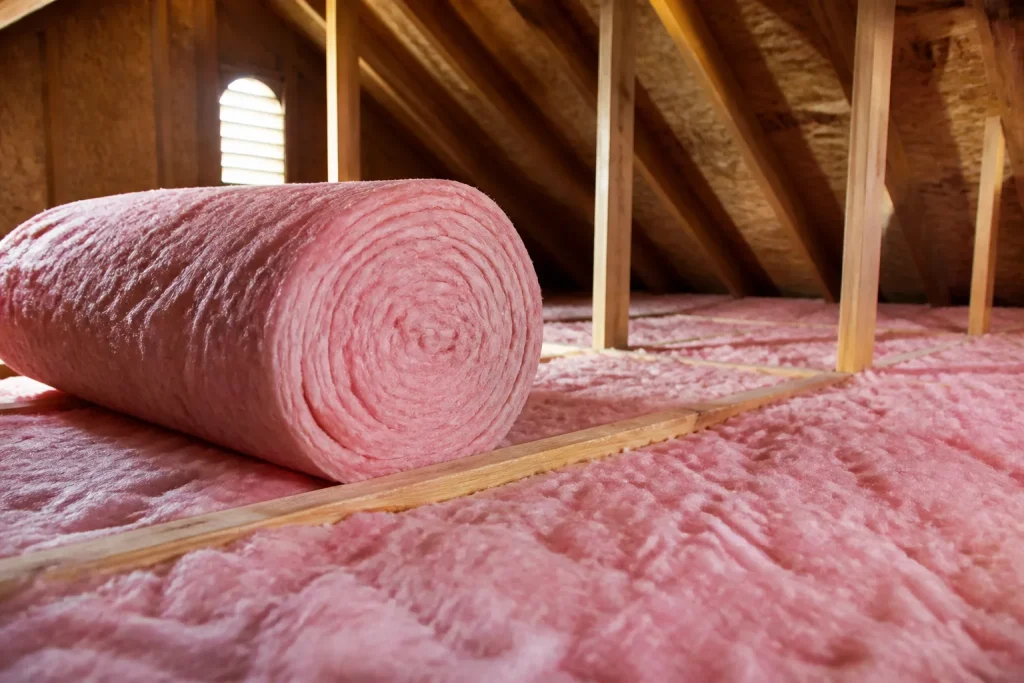
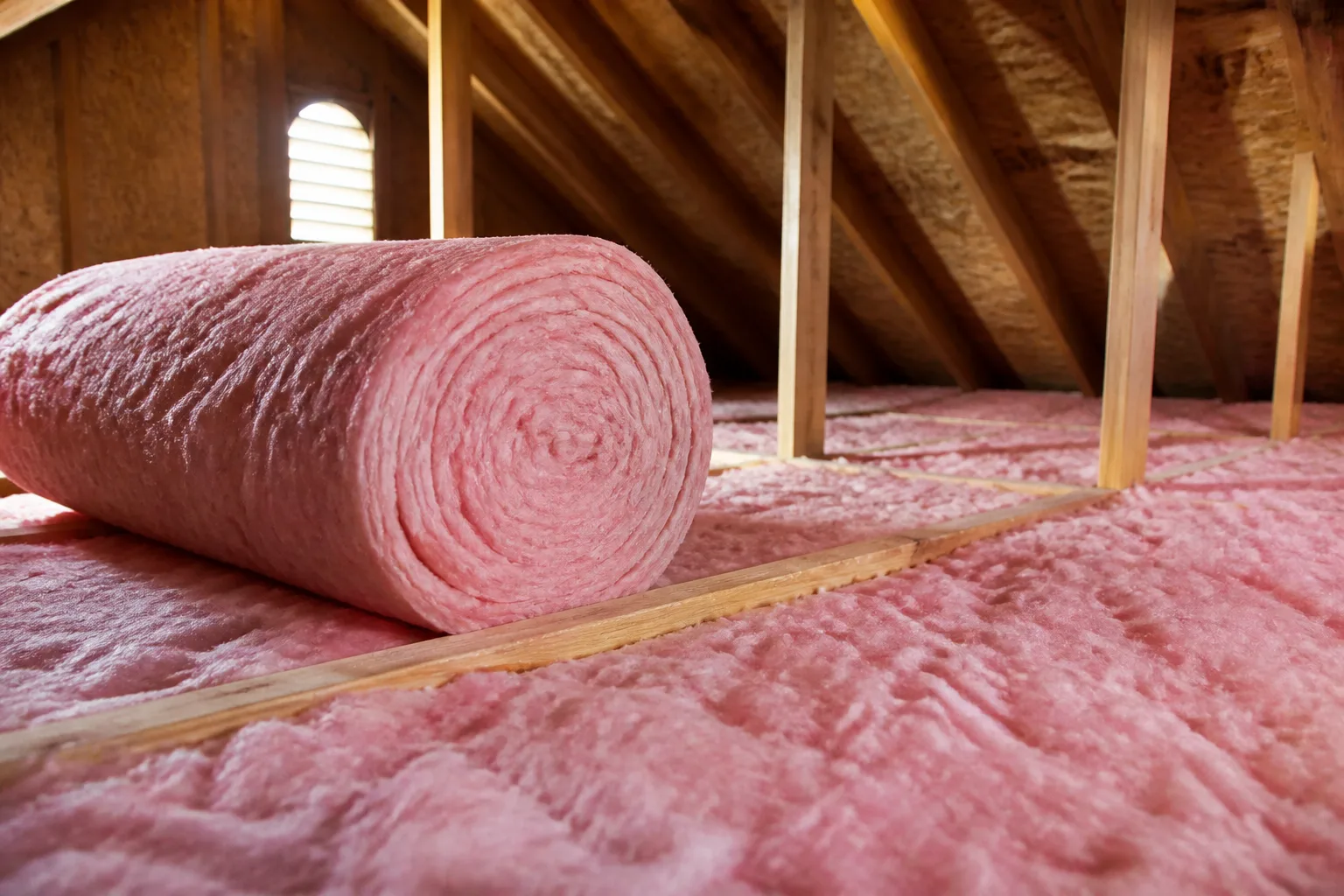
- ProCraft batts are pre-cut fiberglass blankets with a kraft paper facing on one side. They’re built for standard joist bays: 16-inch or 24-inch on-center framing. In a new build or a stripped-to-studs remodel with regular framing, ProCraft is cost-effective and fast to install. In an irregular older attic, it gets tricky, and we’ll cover why that matters in a minute.
- SmartBatt is CertainTeed’s specialty product for 2×4 walls and small cavities with its own facing system. You’ll rarely see it recommended for an open attic floor, but it shows up in cathedral ceiling applications and knee-wall sections of finished attic conversions around Santa Ana’s bungalow neighborhoods.
One thing the brochure won’t tell you: InsulSafe SP and ProCraft are both fiberglass, but they behave differently in a Southern California attic. Blown-in fills irregular spaces naturally. Batts fight them. If your attic has non-standard joist spacing, blocked cavities, or old knob-and-tube wiring still in place, blown-in is the cleaner install nine times out of ten.
Where CertainTeed Fiberglass Genuinely Excels in Santa Ana
We work with eight insulation brands, including CertainTeed, Johns Manville, and Knauf, so we don’t have a dog in this fight. Here’s where CertainTeed fiberglass earns its keep in our local market.
Cost per R-value. For a standard vented attic floor with regular joist spacing, fiberglass delivers the lowest installed cost per R-value of any insulation method available in Santa Ana. When you’re comparing a 1,200-square-foot attic floor, CertainTeed’s ProCraft or InsulSafe SP typically comes in 20 to 40 percent below closed-cell spray foam on a straight R-value basis. That gap has held steady in Southern California pricing over the past several years.
Fire resistance without chemical additives. Fiberglass is naturally non-combustible. CertainTeed products achieve their fire rating without added flame retardants, which matters if you’re sensitive about home chemistry. In Santa Ana’s older homes where the attic sits above bedrooms and the family room, a non-combustible insulation layer is a legitimate safety consideration.
Dimensional stability in dry climates. Santa Ana’s climate is dry for most of the year. Fiberglass doesn’t absorb moisture the way cellulose can, and it won’t shrink or settle dramatically once properly installed. Rockwool shares this advantage, but CertainTeed’s fiberglass products hit a sweet spot of stability and price for a typical vented attic.
Where It Doesn’t: Honest Limitations You Should Know
Now the part most insulation contractors won’t lead with. CertainTeed fiberglass has two meaningful weaknesses in Santa Ana homes: air infiltration resistance and moisture tolerance. Neither is a dealbreaker by itself, but you need to understand both before committing.
Air infiltration. Fiberglass slows heat transfer, but it does almost nothing to stop air movement. Santa Ana sits in a microclimate where warm afternoons drop into cool nights, and that thermal cycling drives air through every gap in your ceiling. If your attic has recessed can lights, an old whole-house fan opening, or framing penetrations from electrical and plumbing runs, fiberglass alone won’t stop the stack effect pulling conditioned air out of your living space. Spray foam air-seals those gaps. Fiberglass just covers them. This is the single biggest reason we sometimes recommend a hybrid approach or a switch to spray foam in attics with lots of penetrations.
Moisture tolerance. Santa Ana’s dry most of the year, but coastal fog influence creeps up the Santa Ana River corridor in late spring and early summer. Homes within a few miles of the 22 and 5 interchange, especially older ones with minimal attic ventilation, can see elevated humidity. If your attic has ever had condensation on the sheathing on a foggy morning, mineral wool’s moisture behavior starts looking better than fiberglass. CertainTeed fiberglass will dry out, but Rockwool and Knauf mineral wool are more forgiving in those cycles.
The Installation Detail That Makes or Breaks CertainTeed Batts
The spec sheet assumes a perfect installation. Most attics don’t have one. The critical factor with ProCraft batts specifically is fit without compression. Fiberglass works by trapping air in tiny pockets. Compress a batt into a cavity that’s half an inch too narrow, and you’ve just removed some of that trapped air, which drops the R-value below the number printed on the package. An R-30 batt stuffed into a 6-inch irregular cavity might perform closer to R-19. The label still says R-30. Your utility bill knows the truth.
We pulled four compressed ProCraft batts out of an attic over near Delhi Park last month. The previous installer had forced 16-inch batts into 14-and-a-half-inch irregular bays, paper facing split, insulation folded at the edges. The homeowner had paid for R-30 coverage and was effectively running R-17. No product reputation survives bad installation.
Questions to ask any installer before they start, whether it’s us or anyone else:
- What’s your process for handling irregular joist spacing?
- Will you air-seal the attic floor before installing batts or blown-in?
- Are you measuring actual cavity width or assuming standard spacing?
- Will you flag areas where the batt can’t be installed without compression and recommend an alternative?
When to call a pro. Fiberglass is safe to handle for short periods with basic PPE, but a full attic insulation job isn’t a weekend project. Working on ceiling joists, around old wiring, and under low-slope roofing in a Santa Ana summer attic means 30 minutes of tolerable conditions followed by sweat-soaked clothing and a real risk of a misstep. We heat exhaustion our crew in those attics. The work deserves caution.
CertainTeed vs. the Competition in Southern California
CertainTeed, Owens Corning, and Johns Manville are the three big names in fiberglass. In the current Southern California market, all three are within 5 to 10 percent of each other on comparable products. That’s not a number that should drive your decision. What actually varies is installer preference and availability, which is a supply chain story, not a quality one. A good installer can hit the same performance with Johns Manville or CertainTeed product. The variable that matters is which contractor has the product on hand when you need it, and whether they’ll install it correctly.
When fiberglass is the right answer, we typically recommend pricing both CertainTeed InsulSafe SP and the comparable blown-in line from Johns Manville or Knauf. The material decision matters less than the installation quality, and anyone who tells you otherwise is selling a brand, not a solution.
Related services in Santa Ana: Attic Insulation in Santa Ana covers the full range of vented attic floor work, including when to pair fiberglass with air-sealing. If your situation calls for air-sealing and higher R-value per inch, Spray Foam Insulation in Santa Ana explains the open-cell and closed-cell options we install through Icynene and Demilec. For older Santa Ana homes with existing insulation you’d rather top up than tear out, Blown In Insulation in Santa Ana walks through the GreenFiber and CertainTeed blown-in retrofit process. Our Easton Insulation Co home page has the full material roster if you want to compare before calling.
The Bottom Line
CertainTeed makes good fiberglass, and for a standard vented attic floor in Santa Ana with regular framing and a clean installation, it delivers strong cost-per-R-value. The honest version of this guide is that the brand matters less than the conditions in your attic. If you have irregular joist spacing, lots of penetrations, or any history of moisture on the sheathing, you need a contractor who’ll tell you when CertainTeed isn’t the best answer, even if it means recommending a competing material.
If you’re in Santa Ana and want a straight read on which product fits your attic, Easton Insulation Co offers free estimates. We’ll look at your joists, your existing insulation, and your humidity history before recommending anything. Call (833) 467-6922 or reach out through our Easton Insulation Co home page.
Frequently Asked Questions
For a standard 1,200-square-foot attic floor, expect installed CertainTeed blown-in fiberglass to run between $1,800 and $3,400 depending on target R-value and existing insulation condition. Batts typically land in a similar range but are more sensitive to framing irregularities. Call (833) 467-6922 for a free estimate specific to your attic.
No. They’re comparable in quality and price across the fiberglass product lines. Both meet the same ASTM performance standards. The brand difference is largely a supply chain and installer preference issue, not a performance one. We install both and have no material reason to push one over the other.
Yes, with blown-in InsulSafe SP. Installers can blow new fiberglass directly over existing acceptable insulation to reach your total target R-value. This is the fastest retrofit path for older Santa Ana homes. Batts should never be layered over existing batts because the second layer can’t achieve proper contact with the cavity walls.
Maybe not. If your attic has air leaks, especially around recessed lights, vents, or old fans, insulation alone won’t stop conditioned air from escaping. Air-sealing before insulating is the difference between a partial fix and a real one. We look at this first on every Santa Ana attic inspection, and it often changes the recommendation. Call (833) 467-6922 and we’ll assess your attic honestly.
Written by the team at Easton Insulation Co, serving Santa Ana since 2017.
Need Insulation Help?
Call Easton Insulation Co — licensed & insured, here with fast after-hours help in Santa Ana.
(833) 467-6922